



Private security firms operate in a demanding space. They are expected to deliver a level of protection that rivals government resources, often with fewer personnel and tighter budgets, all while meeting the exacting expectations of private clients. Understanding how private security firms use K9 solutions reveals why so many of these companies are turning to trained dogs as a core part of their offering rather than an occasional extra.
At Michael, this integration is approached with a level of expertise that comes directly from military grade experience. Our founder, Michael Lapushniansky, spent twenty three years as head trainer of Oketz, the elite canine unit within IDF special forces, and that background informs the way K9 capability is built into a private security operation from the ground up rather than added on as an afterthought.
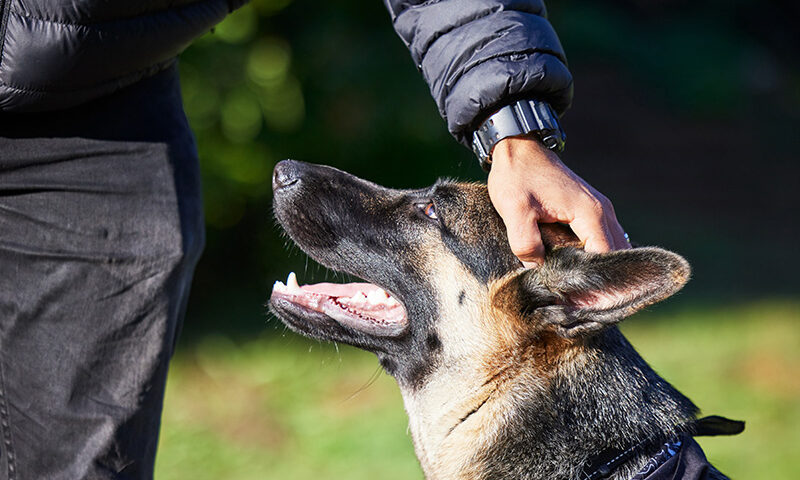
One of the primary ways private security firms use K9 solutions is through perimeter and site protection. A trained dog can patrol a property, detect movement or unfamiliar presence long before a human guard would notice, and respond with a level of speed and instinct that no camera system can replicate. This makes dogs particularly valuable for firms protecting warehouses, industrial sites, private estates, or event venues where a physical presence needs to feel both capable and controlled.
Personal protection details represent another significant application. When a firm is responsible for a VIP client, a properly trained dog can travel alongside the protection team, remaining calm in public settings while staying continuously alert to anything unusual. This kind of quiet vigilance allows a client to move through daily life, attend meetings, or appear at events without the atmosphere feeling heavy or overly guarded, something that matters greatly to clients who value discretion as much as safety.
Private firms working with police adjacent contracts or supporting government and defense institutions also rely on K9 solutions to meet the higher performance standards those relationships demand. A dog used in this context often needs certification, consistent evaluation, and the kind of behavioral reliability that only comes from training grounded in real operational experience rather than general obedience work. This is precisely the gap that decades of elite military training were built to close.
Community organizations and community centers that contract private security firms are increasingly requesting K9 support as part of their overall safety plan. A trained dog offers a visible deterrent and an added layer of awareness in spaces where large groups gather, without requiring the kind of heavy security presence that can make a place of gathering feel unwelcoming.
Dog trainers connected to the private security industry also benefit from studying how these programs are structured, since the standards applied in high level security work often push the entire field toward greater precision and accountability.
Two elements consistently determine whether a K9 program strengthens a private security firm’s offering.
The dog must be matched to the specific role, whether that is patrol, detection, or personal protection, since each demands a different temperament and skill set.
The handler and firm must maintain the training relationship over time, since a dog’s reliability depends on consistent reinforcement rather than a single initial course.
Michael works closely with private security firms to build programs that reflect this level of seriousness, drawing on methodologies shaped by some of the most demanding operational environments in the world.
If your firm is exploring how a well trained dog could strengthen the services you already provide, it may be worth having a focused conversation about what that partnership could look like.