




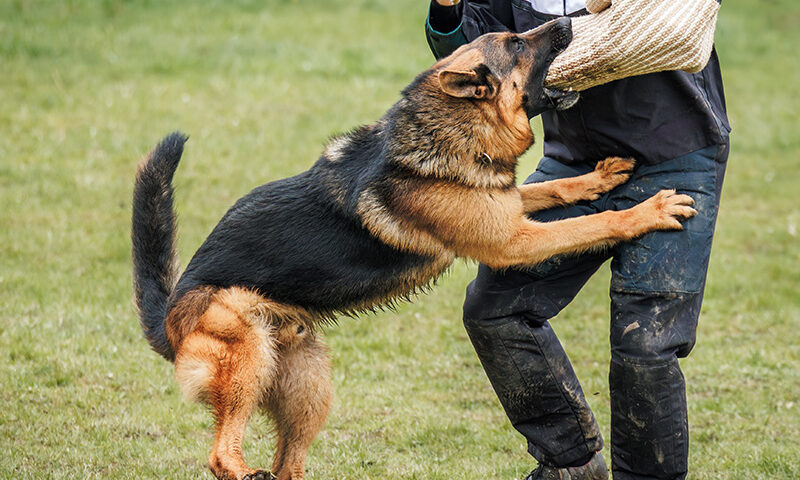
Few areas of canine work demand as much precision as detection training. A dog capable of identifying narcotics or explosives is not simply a pet with a good nose. It is the product of a carefully structured process that shapes natural scenting ability into a reliable, repeatable skill that professionals can depend on in real situations. Understanding detection dog training for narcotics and explosives helps explain why this service carries such weight for the organizations that rely on it.
At Michael, this kind of training draws directly on a background rooted in operational reality. Our founder, Michael Lapushniansky, led detection and working dog programs for twenty three years as head trainer of Oketz, the IDF special forces canine unit. That experience shapes every part of how detection dog training for narcotics and explosives is approached here, since the standards required in a military or security context leave no room for uncertainty.
The foundation of any detection program begins with scent recognition. Dogs are introduced gradually to the specific odors they need to identify, whether that involves particular narcotic compounds or the chemical signatures associated with various explosive materials. Through repetition and positive reinforcement, the dog learns to connect that scent with a clear reward, building an association that becomes instinctive over time. This part of the process requires patience, since rushing scent imprinting often produces a dog that responds inconsistently later on.
Once scent recognition is established, training shifts toward search behavior. A detection dog needs to learn how to systematically cover an area, whether that is a vehicle, a piece of luggage, a building, or an open outdoor space. The dog is taught to signal a find in a clear and controlled way, often through a passive response such as sitting or lying down near the source, rather than a more aggressive alert that could create safety risks around volatile materials. This distinction matters greatly in explosives work, where an overly excited response near a potential threat is far from ideal.
Police and security bodies typically require dogs that can perform under pressure and in unpredictable environments, since real world searches rarely resemble a quiet training room. Government and defense institutions often need dogs whose reliability has been proven across a wide range of conditions, since a missed detection can carry serious consequences. VIP clients sometimes rely on detection dogs as part of a broader personal security plan, particularly when travel, events, or gatherings introduce unfamiliar risks. Communities and community centers, too, are increasingly recognizing the value of detection capability as part of a layered approach to safety, especially in settings where screening people and belongings must be handled with discretion and care.
Dog trainers who study this field closely understand that detection work is one of the most technically demanding disciplines in the profession. It requires not only skill with the dog but a deep understanding of scent theory, environmental variables, and the psychology of working animals under sustained focus.
At Michael’s, every detection dog reflects decades of refined methodology built for genuinely high stakes environments. That standard does not change when the setting shifts from a military operation to a civilian or community context. The commitment to precision remains the same.
If narcotics or explosives detection capability is something your organization has been considering, a conversation about what the right program could look like for your specific needs might be a valuable next step.